Day 24 of 30
Symbolic Meaning of Krishna's Plays
કૃષ્ણ લીલાઓનો સાંકેતિક અર્થ
The deeper meaning behind Krishna Lila
June 9, 2026
No group chat — just daily stories. Or open WhatsApp → Updates → search “AdhikMaas”.
Shri Krishna's childhood was spent in Gokul, in the home of his father Nand and mother Yashoda. But even these names carry meaning beneath their surface. Go means the senses. Kul means a group. So Gokul is the gathering of all the senses. Nand means bliss. Yashoda means the one who bestows honour — the noble tendency within us.
In the basket, Vasudev carried the newborn Krishna across the Yamuna, and the river itself made way for them. In the same way, whoever carries the thoughts of Krishna and the Bhagvad Gita in their mind — no current in this world can obstruct them.
In Gokul, through his various Lilas, Krishna destroyed the Asuras and brought peace and prosperity to the land. Each of these stories carries a deeper, symbolic meaning.
Aghasur Vadh — Destroying Sin
Agha means sin. By slaying the demon of sin, Krishna brought joy and light to Gokul. The message: when we confront and overcome the sin within us, peace naturally follows.
Bakasur Vadh — Destroying Hypocrisy
Bak means a heron — and the heron is a symbol of deceit and pretence. It stands motionless, appearing pious, while waiting to strike. Hypocrisy destroys life's peace from within. The slaying of Bakasur tells us: the mask of false piety must be removed.
Shakatasur Vadh — Destroying False Pride
Shakat means a cart. This demon represents Mithya Abhiman — hollow, baseless pride. A dog walking beneath a cart believes it is carrying the cart's weight. So, it is with those who are puffed up with self-importance over things that were never their doing. For the well-being and health of human life, Shri Krishna destroyed Shakatasur.
Putana Rakshasi Vadh — Destroying the Impure
Put means pure. Na means not. Putana is the impure one — the ungrateful one. She came with poison smeared on her breast, disguising destruction as nourishment. Shri Krishna destroyed her.
Bankimchandra Chattopadhyay, in his work Shri Krishna Charitra, offers an alternative reading: Putana was the name of a poisonous fever that afflicted newborn infants. Krishna studied it and taught that vigorous and firm breastfeeding by the mother could overcome it. Thus Putana — the disease — was vanquished.
Kaliya Nag Mardan — Taming the Poison Within
The serpent Kaliya, with his thousand hoods, had poisoned and polluted the waters of the Yamuna with his venom and his toxic nature, causing great harm to all. Krishna subdued the great serpent. He purified the waters. He freed the people from fear.
Perhaps, at its most practical level, he stopped pollution from entering the Yamuna at a thousand points and made her waters clean again. At the deeper level, the message is clear: the six inner enemies — Kama (desire), Krodha (anger), Lobha (greed), Moha (delusion), Mada (arrogance), and Matsara (envy) — are the serpent within us that must be tamed.
Govardhan Puja — Worship the Mountain, Not the Mirage
The people of Gokul had been worshipping Lord Indra as the rain god. But worshipping Indra is worshipping opulence and display. Rain does not come from worshipping wealth. It comes from caring for the mountains and the trees, from doing work as hard as the mountain itself.
Krishna taught: perform Nishkama Karma — selfless action. Work for the welfare of all. When the offended Indra unleashed a deluge, Krishna lifted the Govardhan mountain on his little finger and gave shelter to all the people of Gokul, protecting them. Perhaps, in earthly terms, he led everyone to an unseen cave in the mountain where they were kept safe. He initiated the worship of Govardhan — and became Govardhandhari, the one who bears the mountain.
Makhan Chori — The Beautiful Theft
In homes where the children went without life's necessities while their elders sold the butter for profit, Krishna broke those pots and redistributed their contents. He brought true Samajvad (socialism) to Gokul. In this sense, Krishna was a genuine revolutionary. Butter — Navneet — means the essence, the best qualities. Krishna always sought the essence.
The Symbols Krishna Carries
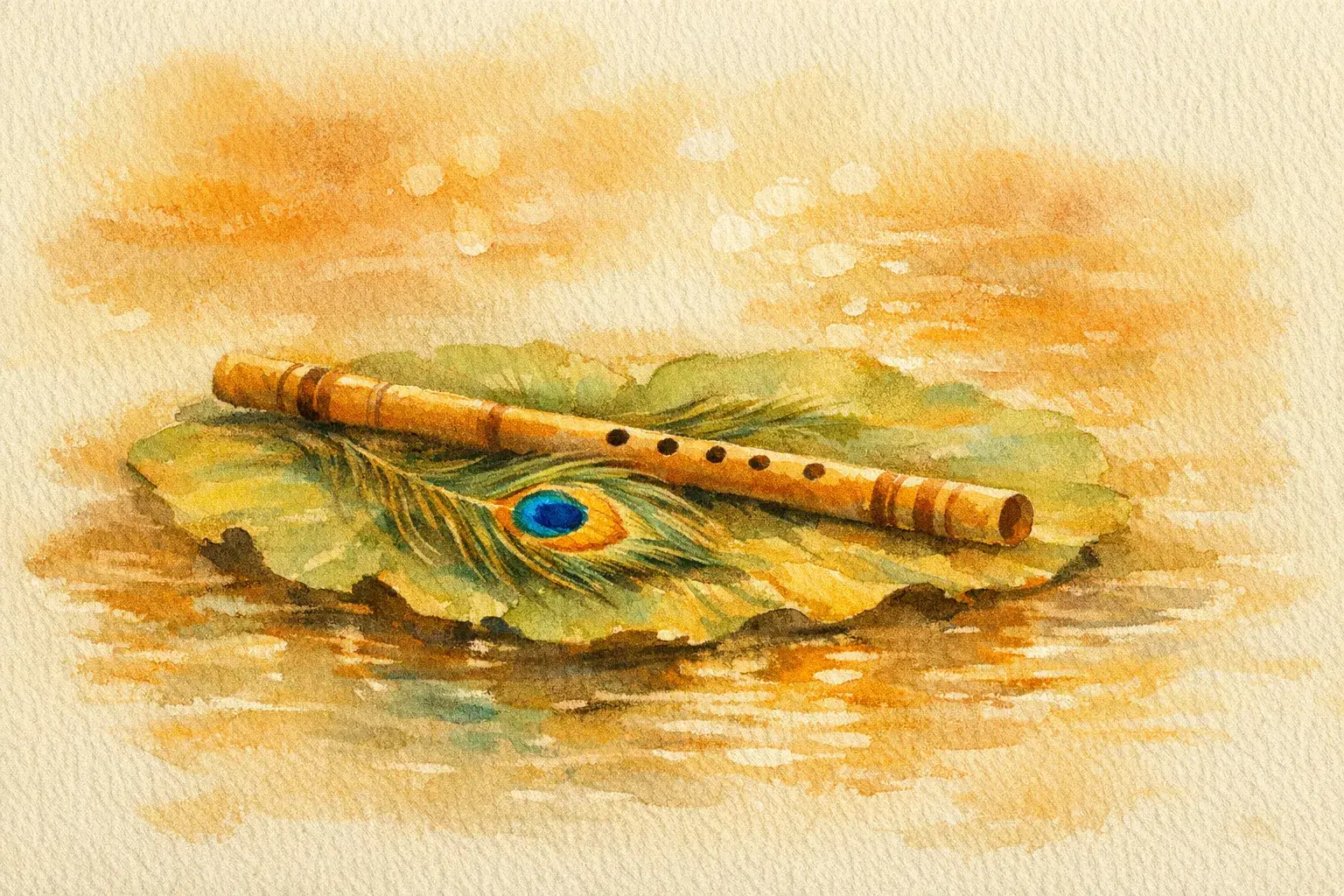
The peacock feather on his head: The peacock is the vehicle of Saraswati, the goddess of wisdom. By placing the feather on his crown, Krishna honoured knowledge above all.
The gunja (rosary pea) bead necklace: Red is the colour of revolution. Krishna wore these humble, common seeds around his neck — embracing the ordinary.
The flute (Vansali): A hollow piece of bamboo, brought to life with a single breath — and from it, the creation of music. The simplest of instruments producing the most divine sound.
Gopal — protector of cows: Krishna loved the cows, who themselves exist to nourish others. His very name speaks of tending to those who serve.
May all these symbols show us the true direction of life. May we become dear to Prabhu — may we earn his nearness, his companionship, his love. With the Sankalpa of striving always toward that end, let us offer our worship to Krishna.
શ્રી કૃષ્ણનું બાળપણ ગોકુળમાં પિતા નંદ માતા યશોદાને ત્યાં વિત્યું. 'ગો' એટલે ઇન્દ્રિયો. 'કુલ' એટલે સમૂહ. 'ગોકુલ' એટલે ઈન્દ્રિયોનો સમૂહ. 'નંદ' એટલે આનંદ. 'યશોદા' એટલે યશ દેનારી સદવૃત્તિ.
-
ટોપલીમાં વાસુદેવને લઈ જનાર વસુદેવને યમુનાએ માર્ગ કરી આપ્યો. એ રીતે મસ્તકમાં કૃષ્ણ અને ગીતાના વિચારોને લઈ ફરનારને વિશ્વમાં કોઈ જ પ્રવાહ નડતો નથી.
-
ગોકુળમાં કૃષ્ણ વિવિધ લીલા દ્વારા અસુરોનો સંહાર કરી ગોકુલમાં શાંતિ, સમૃદ્ધિ લાવ્યા.
અઘાસુર વધ
'અઘ' એટલે પાપ. પાપ રૂપી અસુરનો વધ કરી કૃષ્ણે ગોકુળમાં પ્રસન્નતા પ્રગટાવી.
બકાસુર વધ
'બક' એટલે બગલો — બગલો એટલે દંભનું પ્રતીક. દંભથી જીવનમાં શાંતિ નાશ પામે છે, તેથી તેવા બકાસુરનો વધ જરૂરી છે.
શકટાસુર વધ
'શકટ' એટલે ગાડું. મિથ્યા અભિમાન માનવીની સુખ-શાંતિ હણે છે. ગાડાં નીચે ચાલતો કૂતરો એમ જ સમજે છે કે હું જ ગાડાંનો ભાર ઉઠાવું છું. માનવના સુખ સ્વાસ્થ્ય માટે શકટાસુરનો વધ શ્રીકૃષ્ણે કર્યો.
પૂતના રાક્ષસીનો વધ
'પૂત' એટલે પવિત્ર. 'ના' એટલે નહીં. ભગવાનનું કામ કરે તે પવિત્ર. પૂતના અપવિત્ર, કૃતઘ્ની હતી. પોતાના સ્તન પર ઝેર લગાવીને આવી હતી. તેથી શ્રી કૃષ્ણે તેનો નાશ કર્યો. બંકિમચંદ્ર ચટ્ટોપાધ્યાય તેમના પુસ્તક શ્રીકૃષ્ણચરિત્ર માં જણાવે છે કે પૂતનાનામનો એક ઝેરી તાવ નવજાત શિશુઓને લાગુ પડતો, જેનો કૃષ્ણે અભ્યાસ કર્યો અને સમજાવ્યું કે ચુસ્ત અને જોરથી માતાનું સ્તનપાન કરવાથી તે કાબુ કરી શકાય છે. આમ પૂતનાનો નાશ કર્યો.
કાલીયાનાગ મર્દન
પોતાના ઝેર અને વિકારથી યમુનાનું જળ ઝેરી, પ્રદૂષિત કરી હાનિ પહોંચાડનાર સહસ્ત્રફેણવાળા નાગને નાથ્યો. યમુનાનું જળ નિર્મળ કર્યું. લોકોને નિર્ભય બનાવ્યા. હજારો જગ્યાએથી પ્રદૂષિત થતી યમુનાનું પૉલ્યૂશન રોકી એને ચોખ્ખી કરી હશે. આપણી અંદર રહેલા ષડ્વિકારો — કામ, ક્રોધ, લોભ, મોહ, મદ, મત્સરના નાગને નાથવા જરૂરી છે.
ગોવર્ધન પૂજન
ગોકુળના લોકો વરસાદ આપનાર દેવ તરીકે ઇન્દ્રપૂજન કરતા હતા. ઇન્દ્રનું પૂજન એટલે વૈભવનું પૂજન. વૈભવને પૂજવાથી વરસાદ નથી આવતો, પણ પહાડ અને વૃક્ષોનું જતન કરવાથી, પહાડ જેવો પરિશ્રમ કરવાથી ફળ મળે છે. નિષ્કામ કર્મ કરો. લોકહિત માટે કર્મ કરો. ગુસ્સે થયેલ ઇન્દ્રે મુશળધાર વરસાદ વરસાવ્યો. ટચલી આંગળીએ ગોવર્ધન પર્વત ઉપાડી ગોકુળવાસીઓને આશરો આપ્યો, તેમનું રક્ષણ કર્યું. અર્થાત્ આજ સુધી લોકોએ ન જોયેલી કોઈ ગુફામાં બધાને સાચવ્યા. ગોવર્ધન પૂજા શરૂ કરાવી ગોવર્ધનધારી બન્યા.
માખણની ચોરી
જીવન જરૂરિયાતોથી ઘરના બાળકો વંચિત રહે અને તે વેચી પૈસા ઊભા કરનારની મટકી ફોડી, સાચો સમાજવાદ ગોકુળમાં લાવનાર કૃષ્ણ સાચા ક્રાંતિકારી ગણાય. માખણ-નવનીત એટલે સાર — સદગુણો.
કૃષ્ણ સાથે સંકળાયેલ પ્રતીકો
માથા પર મોરપીંછ: સરસ્વતીના વાહક/જ્ઞાનીને માથે ચડાવ્યો.
ચણોઠીની માળા: લાલ રંગ ક્રાંતિનું પ્રતીક. સામાન્ય એવા ચણોઠીના બી ને ગળે ધારણ કર્યા.
વાંસળી: વાંસનો પોલો ટુકડો લઇ ફૂંક મારી સંગીત નિર્માણ કર્યું.
ગોપાલ: ગાયો પર પ્રેમ કર્યો. ગાયો બીજા માટે ઉપયોગી.
આ બધા પ્રતીકો આપણને જીવનની સાચી દિશા દેખાડે ને પ્રભુના પ્રિય બની શકીએ. પ્રભુનું સાનિધ્ય, સામીપ્ય, સ્નેહ મેળવી શકીએ તે માટે સદાય પ્રયત્નશીલ બનવાના સંકલ્પ સાથે કૃષ્ણ પૂજા કરીએ.
A Reflection for Today
Every demon Krishna slays in Gokul is a demon we carry in our pocket. Bakasur, the heron of hypocrisy, stands motionless and pious while waiting to strike — and how many of us curate an image of virtue on our screens while harboring very different intentions beneath the surface? Shakatasur, the hollow pride of believing you carry a weight that was never yours to bear, lives in every inflated bio, every title we cling to, every accomplishment we claim that was built by the labor of others. The story does not ask us to admire Krishna's strength from a safe distance. It asks us to look inward and name which Asura still thrives unchallenged in the Gokul of our own senses. Which inner demon have you made peace with, simply because defeating it would require you to change?
Today’s Mantra for Japa
Om Namo Bhagavate Vasudevaya
Recite 11 times
For Family Discussion
- 1Which story of Krishna's Lila carries a message that feels relevant to your life right now?
- 2What is the difference between reading a sacred story literally and reading it symbolically?
Something to Sit With This Evening
“Krishna's Lila is not mythology. It is a mirror — and what you see in it reveals where you are on the path.”
From Adhik Mas Nu Nitya Chintan by Hitendra Gandhi & Jyotsna Shah. About the authors