Day 28 of 30
Misidentified Swastika
સ્વસ્તિકની ભૂલભરેલી ઓળખ
Reclaiming the true identity of the Swastika
June 13, 2026
No group chat — just daily stories. Or open WhatsApp → Updates → search “AdhikMaas”.
A Misunderstood Symbol
Every year, I celebrate Diwali as though I were home in India — even from my apartment in New York. The space transforms with lights, candles, flowers, sweets, and the fragrance of Indian cooking. I take pride in being able to recreate my mother's recipes (at least, as much as I can remember).
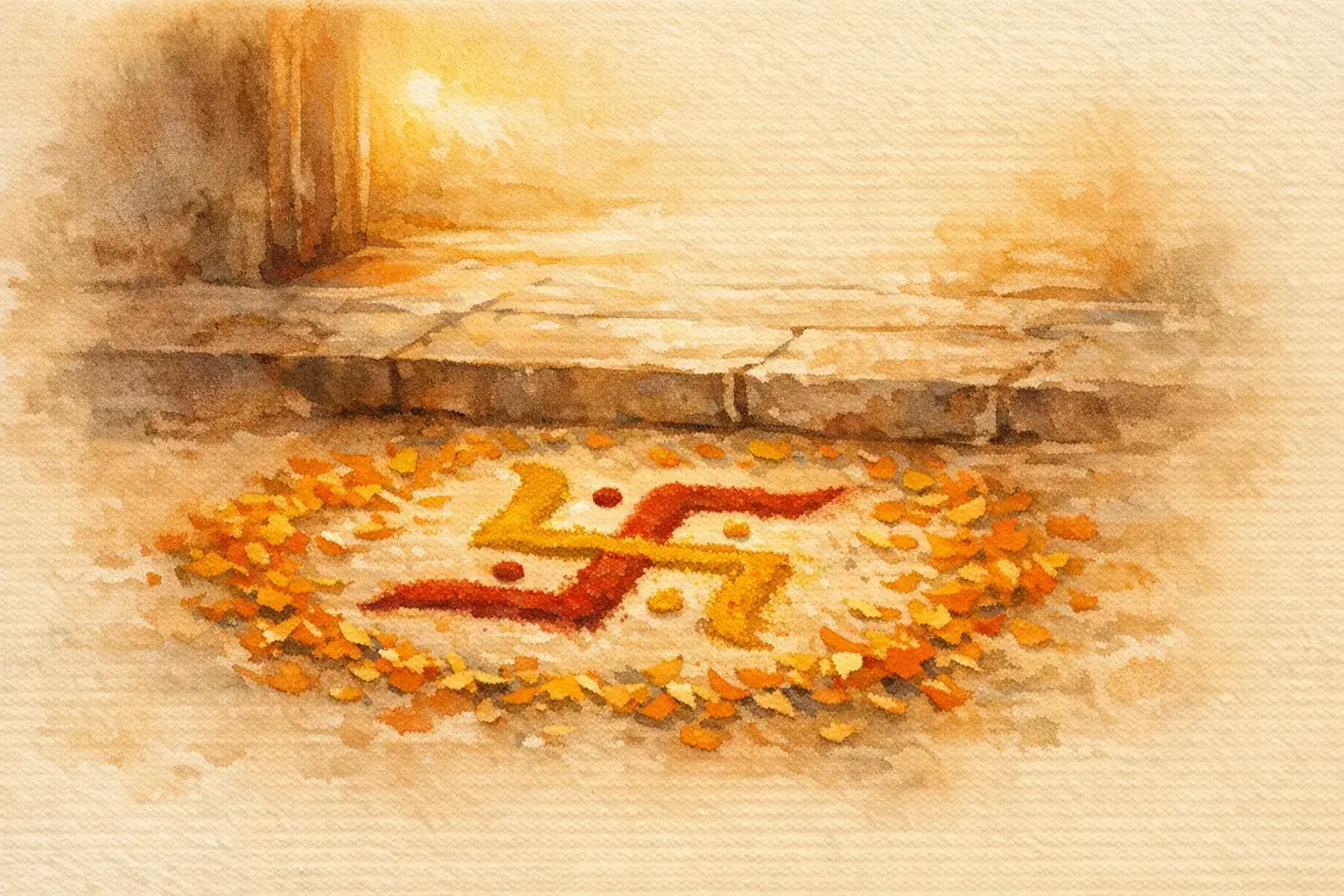
As I do every year, on Diwali evening, in preparation for the puja, I drew a Swastika — the Hindu symbol of auspiciousness — outside my apartment door, to invite Lakshmi, the Devi of prosperity, into our home and lives. I have performed this ritual regularly in India, in Pittsburgh, in New Jersey, and for the last six years at my current apartment in New York.
This year, however, was different. There was a knock at my door that night. It was my property manager and a security guard. They had come to confront me about what they called the "Nazi sign" on my door — to reprimand me and demand that I remove it immediately.
I was stunned, but I quickly saw the misunderstanding and tried to explain what the Swastika symbol means, that I was celebrating the Hindu festival of Diwali. But for reasons I could not fathom, they continued shouting at me, insisting the symbol be removed that very minute. They said it was offensive and racist. Even after I explained at length, they did not want it on their property.
Confused and lost in that moment, I forgot everything about my basic human rights. I said fine. They left.
As I sat at my doorstep, wiping away the kumkum Sathiya, I could not hold back my tears. I managed to gain control over my feelings of despair, but I felt helpless at having been accused of being something I am not.
I spoke with my husband, friends, and colleagues to understand which aspects of this interaction had hurt me so deeply, why I was so unsettled, and what I could do to make this right. My instinct was to send a strong complaint letter to the management — demanding they investigate their staff's background, send their employees for sensitivity and cultural training, and address the way they had handled the situation. But that would have been a temporary fix. What about next year, or when I move to a new place?
I realized that the real solution was to spread awareness. Education was the answer.
The True Meaning of Swastika
The Hindu Swastika is a symbol of auspiciousness and an important part of Hindu Dharma. I understand that the symbol reminds people of the Nazi swastika, and I cannot change history — but I can help people understand that these are two entirely different symbols with different meanings and purposes.
The word "Swastika" comes from the Sanskrit Svastika. "Su" means "good" or "auspicious," and "Asti" means "it is." Together, with the diminutive suffix "ka," it becomes Swastika — "that which brings good." The literal meaning of Swastika is: "It is good."
Today, the Swastika is so deeply embedded in the collective consciousness as a symbol of hate that it has completely lost its original meaning — a symbol of Shubh (auspiciousness) and Labh (benefit). With some effort, I believe we can restore its original sacred meaning across the world.
I am not suggesting that we forget the horrors inflicted upon humanity under the Nazi flag. But if we can educate people about the Swastika's original meaning, perhaps we can free it from Hitler's grip.
Two Symbols, Two Meanings
On one side, the Swastika stands as a symbol of auspicious feeling extending infinitely outward — its arms reaching into the four directions without end. On the other side, it serves as a reminder of the capacity for human ego, embodied by a man like Hitler. Both realities coexist within this ancient symbol.
This entire episode reaffirms the reality that we live in a world where people come from diverse backgrounds, ethnicities, cultures, and nations. We exist among people who may not see the world the way we understand it.
I can forgive the property manager's ignorance. But what do I do about their complete unwillingness to understand another person's perspective?
This cultural gap must be bridged — and the work begins with me, with you, with all of us. Truly, the power of education and understanding is greater than the power of authority and force.
(Meghna Shah, New York)
સ્વસ્તિકની ભૂલભરેલી ઓળખ
હું દર વર્ષે દિવાળીની ઉજવણી કરું છું જાણે કે હું ભારતમાં ઘરે જ હોઉં. ન્યૂયોર્કમાં મારો એપાર્ટમેન્ટ લાઇટ, મીણબત્તીઓ, ફૂલો, મીઠાઈઓ અને ભારતીય ખોરાકની સુગંધથી બદલાઈ જાય છે. મારી મમ્મીએ બનાવેલી વાનગીઓ ફરીથી બનાવવા માટે કાબિલ હોવાનો મને ગર્વ છે (ઓછામાં ઓછું મને જેટલું યાદ છે).
દર વર્ષની જેમ સાંજે, દિવાળીની પૂજાની તૈયારી તરીકે, મેં અમારા ઘર અને જીવનમાં સંપત્તિની દેવી 'લક્ષ્મી'ને આમંત્રિત કરવા માટે મારા દરવાજાની બહાર સ્વસ્તિક — શુભનું હિન્દુ પ્રતીક — દોર્યું. આ ધાર્મિક વિધિ મેં ભારતમાં, પિટ્સબર્ગ, ન્યુ જર્સીમાં અને છેલ્લા ૬ વર્ષથી ન્યૂયોર્કમાં રેગ્યુલર રીતે મારા હાલના એપાર્ટમેન્ટમાં પણ કરી છે.
જો કે, આ વર્ષ અલગ હતું. રાત્રે મારા દરવાજે ટકોરા પડ્યા. તે મારા પ્રોપર્ટી મેનેજર અને સેક્યુરીટી ગાર્ડ હતા. તેઓ મારા એપાર્ટમેન્ટની બહાર લગાડેલી "નાઝી નિશાની" પર મને પ્રશ્ન કરવા, ઠપકો આપવા આવ્યા હતા અને હું એ તરત ઊતારી લઉં એવી માંગ કરતા હતા.
હું આશ્ચર્યચકિત થઈ ગઈ, પરંતુ તરત જ ગેરસમજ જોઈને સમજાવ્યું કે સ્વસ્તિકના પ્રતીકનો અર્થ શું છે? હું હિંદુ તહેવાર — દિવાળી — ઊજવી રહી હતી. પરંતુ કેટલાક કારણોસર તેમણે મારી સામે જોર જોરથી ચીસો પાડવાનું ચાલુ રાખ્યું. તે જ મિનિટે સ્વસ્તિક હટાવી લેવાની માંગણી કરી. તે કહેતા હતા કે એ ચિન્હ અપમાનજનક અને જાતિવાદી હતું. વિગતે ખુલાસો કર્યા પછી પણ તેમની મિલકત પર તેઓ એ ઇચ્છતા ન હતા.
મૂંઝવણભરી અને ખોવાયેલી એ ક્ષણે તો હું મારા માનવીય મૂળભૂત અધિકારો વિશે બધું જ ભૂલી ગઈ હતી. મેં કહ્યું ઠીક છે. તેઓ નીકળી ગયા.
આંગણે બેસીને હું કંકુના સાથિયા ભૂંસી રહી હતી, ત્યારે મારા આંસુઓને રોકી ન શકી. હતાશાની લાગણી પર મેં કાબુ મેળવ્યો, પણ જેવી હું નથી તેવા હોવાના મારા પર લાગેલા આક્ષેપથી હું અસહાય હોવાનું અનુભવી રહી હતી — Helpless and Excluded.
મેં મારા પતિ, મિત્રો અને સહકર્મીઓ સાથે વાત કરી, એ સમજવા માટે કે આ ક્રિયાપ્રતિક્રિયાના કયા પાસાંથી મને નુકસાન થયું છે? હું શા માટે આટલી અસ્વસ્થ હતી અને આ આખી બાબતને ઠીક કરવા હું શું કરી શકું? તે લોકોના બેકગ્રાઉન્ડની તપાસ ન કરવા બદલ, તેમના કર્મચારીઓને સંવેદનશીલતા/સંસ્કૃતિ પ્રશિક્ષણમાં મોકલવાનું સૂચન કરવા, તેઓ જે રીતે પરિસ્થિતિને હેન્ડલ કરે છે તે માટે, મેનેજમેન્ટને સ્ટ્રોંગ કમ્પ્લેઇન્ટ લેટર મોકલવાનો મારો આગ્રહ હતો. પરંતુ તે કામચલાઉ જ હશે. જ્યારે હું સ્થળાંતર કરીશ ત્યારે આવતા વર્ષે શું થશે? હું સમજી શકી કે આ માટે વાત જ ફેલાવવી રહી. શિક્ષણ એજ ઉકેલ હતો.
હિંદુ સ્વસ્તિકનો સાચો અર્થ
હિંદુ સ્વસ્તિક એ શુભનું પ્રતીક છે અને હિંદુ ધર્મનો મહત્વનો ભાગ છે. હું સમજું છું કે એ પ્રતીક લોકોને નાઝી સ્વસ્તિકની યાદ અપાવે છે અને હું ઇતિહાસ બદલી શકતી નથી, પરંતુ હું લોકોને એ સમજવામાં મદદ કરી શકું છું કે તે બે અલગ-અલગ પ્રતીકો છે અને તેમનો અર્થ અને ઉદ્દેશ્ય અલગ છે.
"સ્વસ્તિક" શબ્દ સંસ્કૃત સ્વસ્તિકમાંથી આવ્યો છે. "સુ" એટલે "સારું" અથવા "શુભ" + "અસ્તિ" એટલે કે "તે છે." સુ અને અસ્તિનો સમાસ થઈ લઘુતાવાચક 'ક' લાગીને બને છે સ્વસ્તિક — શુભ કરનાર. સ્વસ્તિકનો શાબ્દિક અર્થ થાય છે "તે સારું છે."
આજે, સ્વસ્તિક નફરતના પ્રતીક તરીકે સામૂહિક ચેતનામાં એટલો સમાયેલો છે કે તે તેના મૂળ અર્થને સંપૂર્ણપણે ખોઈ ચુક્યો છે — જે શુભનું, લાભનું પ્રતીક છે. થોડી મહેનત કરીએ તો મને લાગે છે કે આપણે વિશ્વભરમાં તેના મૂળ શુભ હેતુના અર્થમાં સ્વસ્તિકનો અર્થ પાછો લાવી શકીએ. મારું એવું સૂચન નથી કે આપણે નાઝી ધ્વજ હેઠળ માનવતા પર લાદવામાં આવેલી ભયાનકતાને ભૂલી જઈએ, પરંતુ જો આપણે લોકોને સ્વસ્તિકના મૂળ અર્થ વિશે શિક્ષિત કરી શકીએ તો કદાચ આપણે તેને હિટલરની પકડમાંથી મુક્ત કરી શકીએ.
આ રીતે એક બાજુ શુભ ભાવના અનંત વિસ્તારના (સ્વસ્તિકના છેડા ચારે દિશાઓમાં અનંતપણે ખેંચાય છે) પ્રતીક તરીકે તો બીજી બાજુ હિટલર જેવા માણસના અહંકારની ક્ષમતાના રીમાઇન્ડર તરીકે — બંને રીતે સ્વસ્તિક ઊભા છે.
આ આખી ઘટના એ હકીકતને ફરીથી સ્થાપિત કરે છે કે આપણે એવી દુનિયામાં રહીએ છીએ જ્યાં લોકો વિવિધ પૃષ્ઠભૂમિ, જાતિ, સંસ્કૃતિ અને દેશોમાંથી આવે છે. આપણે એવા લોકો વચ્ચે છીએ, જેઓ આપણી વિચારસરણી અથવા દુનિયાને આપણે જે રીતે જાણીએ છીએ તે રીતે ન પણ જોતા હોય.
હું પ્રોપર્ટી મેનેજરની અણસમજને જતી કરું પણ એની અન્યના દૃષ્ટિકોણને સમજવાની તૈયારી જ ન હોવાનું શું કરું? આ સાંસ્કૃતિક ખાઈ — Cultural Gap — ને પૂરવાનું કામ મારા, તમારા, આપણાથી શરૂ થવું જોઈએ. સાચ્ચે જ સત્તા અને સામર્થ્ય કરતાં શિક્ષણ અને સમજણની તાકાત મોટી છે.
(Meghna Shah, NY)
A Reflection for Today
In a world where symbols travel faster than their histories, misunderstanding is almost inevitable — and yet what strikes deepest in Meghna's story is not the property manager's ignorance but his refusal to listen. We live in an era of abundant information and scarce patience. A sacred mark drawn with kumkum and centuries of devotion is flattened into a single horrifying association, and the conversation ends before it begins. This is the modern condition: we encounter one another's traditions as fragments, stripped of context, and we react to the fragment rather than seeking the whole.
What the story teaches, though, is not bitterness but something far harder — the discipline of responding to ignorance with education rather than escalation. Meghna's instinct to demand punishment gave way to a deeper recognition that awareness, patiently offered, outlasts any complaint letter. The Swastika's original meaning — "It is good" — cannot be restored through force; it can only be restored through the slow, unglamorous work of one conversation at a time. When you encounter someone who has reduced your tradition to a caricature, do you have the steadiness to offer the fuller story, even when you are the one who has been hurt?
Today’s Mantra for Japa
Om Swasti Na Indro Vriddhasravah
Recite 3 times
For Family Discussion
- 1How do you feel when sacred symbols are misunderstood or misused?
- 2What is the responsibility of those who know the true meaning?
Something to Sit With This Evening
“When a sacred symbol is stolen, the answer is not to hide it. The answer is to tell its real story — clearly, calmly, completely.”
From Adhik Mas Nu Nitya Chintan by Hitendra Gandhi & Jyotsna Shah. About the authors