Day 30 of 30
Itna To Karna Swami & Yajna
ઇતના તો કરના સ્વામી અને યજ્ઞ
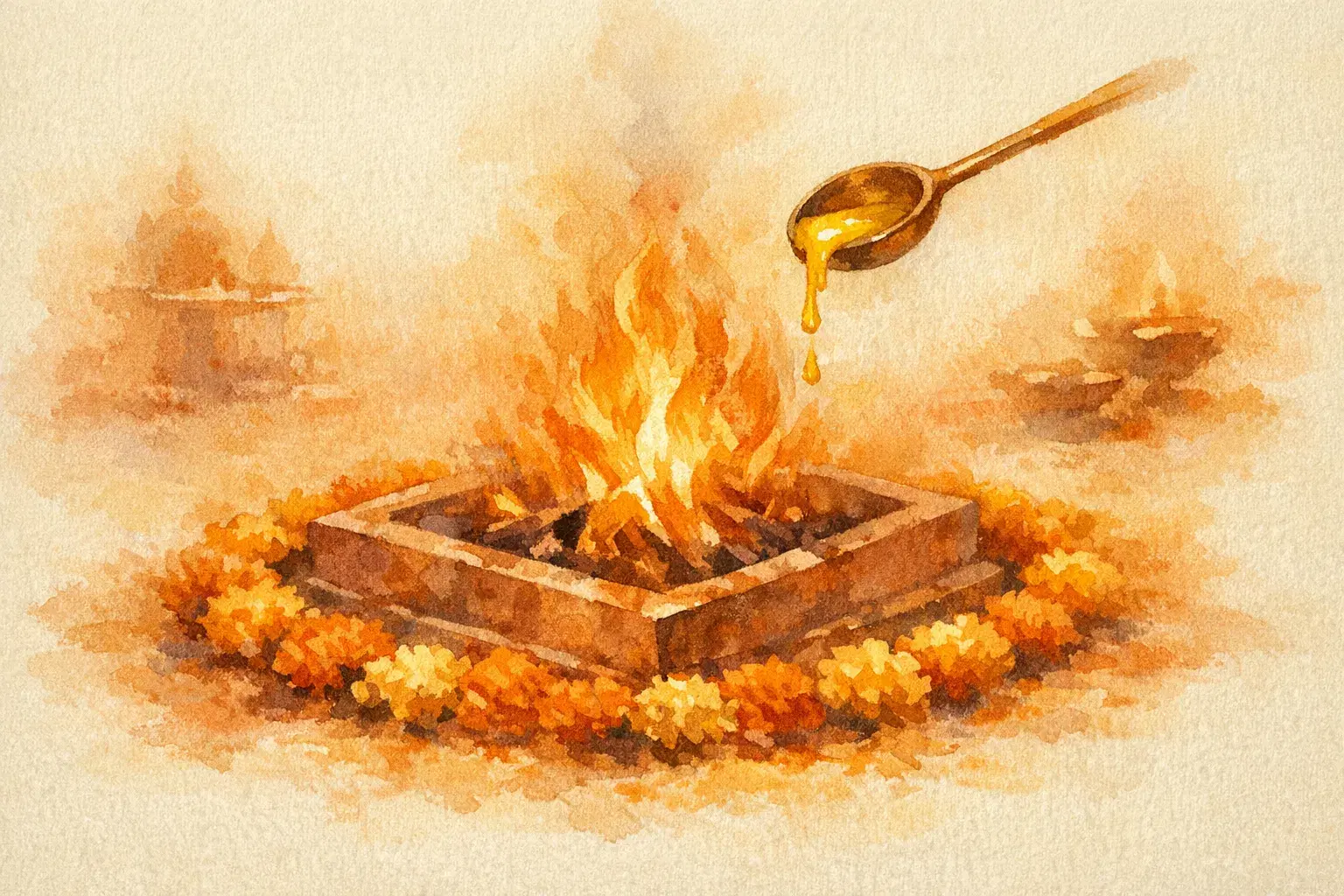
A humble prayer and the sacred fire — the closing offering of Adhik Maas
June 15, 2026
No group chat — just daily stories. Or open WhatsApp → Updates → search “AdhikMaas”.
Do This Much, O Lord
In Bhajans (devotional hymns), we often hear a plea for the moment of death:
"Itna to karna Swami, jab pran tan se nikle..." "Do this much, O Lord — when the life-breath leaves this body..."
Grant me the bank of the Ganga, grant me the nearness of the beloved Sanvariya (Krishna).
The Bhagvad Gita teaches that if one remembers Bhagwan at the moment of death, the soul largely finds its resting place in Him. But Bhagwan's name will come to mind at the moment of death only if one has remembered it throughout life — not mechanically, but with full awareness.
A life spent entirely in indulgence and pleasure, and then at the very end, a son named "Narayan" is called and the dying Ajamil attains Mukti (liberation) simply because the divine name was uttered? That story does not sit well. The principle of Karma — or of divine grace — cannot be so weak and devoid of logic.
Two Meanings of "Will"
The preparation for death is not accomplished merely by making a "Will" — a legal testament distributing one's possessions. The real preparation happens during life itself; by transforming one's inner "will" — one's desires, one's Vasanas (deep-rooted tendencies).
The Jnana Shakti (power of knowledge), Kriya Shakti (power of action), and Ichha Shakti (power of will) that a human being has been given — the way these are used during life will determine the nature of death. As you have lived, so shall you die. That is certain.
Wishes for the Final Hour
And yet, there is a list I once read in a book — "Wishes for the Final Hour" — that I wish to share here. This list may seem to be about what we want at the moment of death, but in truth, it teaches us how to live.
"Grant me this, O Prabhu, in my final hour:"
- When death arrives, let me be ready to accept it.
- Let no bonds of Maya remain. Let there be no clinging to worldly wealth, possessions, or relationships.
- In the final moment, O Prabhu, let there be remembrance of You, recitation of Your qualities, and refuge in You alone.
- Let there be an honest reckoning of my mistakes. Let tears of repentance — tears that wash away sin — flow from my eyes.
- Let me place a garland of Vandana (reverence) at Your feet.
- Let me become aware of my enslavement to the senses.
- As my protector, O Prabhu, come Yourself.
- Save me from the craving for food and taste.
- Let me be spared from cruelty and become gentle.
- If my sinful conduct has displeased You, let me see that sadness on Your face.
- Let me realize how much time I wasted meddling in the affairs of others.
- In the next world, grant me the grace of Jnana (knowledge).
- Free me, O Prabhu, from jealousy, greed, anger, perversions, faults, and vices.
- Let me experience the constant shower of Your Prem (love).
- In my life, let there be no rule of Vasana (desire) — let only Vasudeva's rule prevail.
- Rather than asking what to wish for at the moment of death, grant me the blessing of improving my life while I am still living.
- Let me understand the meaning of true Dharma Shikshan (spiritual education) — namely:
- Svadhyaya — the study of Shastras and sacred texts
- Samyam — the observance of disciplines and restraints
- Svabhava (one's true nature) — the experience of oneness with all beings
All these wishes for the "final hour" depend entirely on how we use the "present hour." Let that truth not be forgotten.
ઇતના તો કરના સ્વામી
ભજનમાં આપણે ઘણીવાર મરણ સમયની માંગ રૂપે સાંભળીએ છીએ કે "ઇતના તો કરના સ્વામી જબ પ્રાણ તનસે નીકલે…" ગંગાજીનો તટ, સાંવરિયાની નિકટતા.
મરણ વખતે ભગવત સ્મરણ કરો તો બહુધા તેમાં જ જીવ પુનઃ સ્થિર થાય છે તેમ ગીતા કહે છે. પણ મરણ વખતે ભગવાનનું નામ યાદ તો જ આવશે જો જીવનભર યાંત્રિકતાપૂર્વક નહીં પણ સભાનતાપૂર્વક તેનું સ્મરણ કર્યું હશે.
જીવનભર માત્ર ભોગવિલાસ અને મોજ મજા ઇત્યાદિ અને કેવળ મૃત્યુ સમયે પુત્ર 'નારાયણનું' નામ લઈ દીકરાને બોલાવનાર અજામીલ મુક્તિ પામી જાય… યે બાત હજમ નહીં હોતી. કર્મનો કે કૃપાનો સિદ્ધાંત આટલો તર્કશૂન્ય અને નબળો તો ન જ હોઈ શકે.
'વીલ'ના બે અર્થ
મરણની તૈયારી કેવળ 'વીલ' (WILL) — યાને વસિયતનામું — બનાવીને નથી થતી, પણ જીવન દરમિયાન જ 'વીલ' (WILL) — યાને ઈચ્છાઓ/વાસનાઓને — બદલીને કરી શકાય છે. માનવને જે જ્ઞાનશક્તિ, ક્રિયાશક્તિ અને ઈચ્છાશક્તિ મળ્યા છે તેનો જીવનમાં જેવો ઉપયોગ કર્યો હશે તેવું જ મૃત્યુ મળશે. જેવું જીવ્યા હશો તેવું જ મોત મળશે — આ વાત નિશ્ચિત છે.
છતાંય કોઈ એક પુસ્તકમાં વાંચેલું 'છેલ્લી ઘડીની માંગણીઓ'નું લિસ્ટ અહીં વહેંચવું ગમશે. આ લિસ્ટ આપણને મરતી વખતે શું જોઈએ છે, એના કરતાં જીવવાનું કઈ રીતે છે તે સમજવામાં જરૂર ઉપયોગી થઈ શકે.
'આટલું આપજે પ્રભુ મને છેલ્લી ઘડી'
- મરણ આવે ત્યારે તે મારી તે સ્વીકારવાની તૈયારી હો.
- માયાના બંધન બચ્યા ન હો. સંસાર, સંપત્તિ કે સંબંધોનું કોઈ વળગણ ન રહો.
- છેલ્લી ઘડીએ પ્રભુ, મને તારું સ્મરણ, તારા ગુણોનું રટણ, તારું જ શરણ રહો.
- ભૂલોનો એકરાર હો. પાપોનું પ્રક્ષાલન કરનારા આંસુઓ મારી આંખમાંથી વહો.
- તને વંદનની ફૂલ માળા પહેરાવું.
- મારી વિષય લંપટતાનું ભાન થાઓ.
- મારા રક્ષક રૂપે પ્રભુ તું જ આવજે.
- ભોજનની અને સ્વાદની લાલસાથી બચાવજે.
- હું નિષ્ઠુરતાથી બચું અને કોમળ બનું.
- મારા પાપાચરણ જોઈ તું નારાજ થયો હોય તે ઉદાસી હું જોઈ શકું.
- અન્યોની પંચાતમાં સમય વેડફાયાનું મને ભાન થાઓ.
- પરલોકમાં જ્ઞાન પ્રાપ્તિની મારા પર કૃપા થાઓ.
- ઈર્ષા, લાલસા, ક્રોધ, વિકારો, દોષો, દુર્ગુણો ઇત્યાદિથી પ્રભુ મને મુક્ત કર.
- ભગવાન, તારી સતત વરસતી પ્રેમ વર્ષાનો મને અનુભવ થાઓ.
- મારા જીવનમાં વાસનાનું નહીં, વાસુદેવ તારું જ શાસન રહો.
- મોત વખતે શું માંગુ તેના બદલે મારું જીવન જ સુધારું એવા આશીર્વાદ રહો.
- સાચા ધર્મ શિક્ષણનું મને ભાન થાઓ, અર્થાત:
- સ્વાધ્યાય — શાસ્ત્ર ગ્રંથોનો અભ્યાસ
- સંયમ — વિધિનિષેધોનું પાલન
- સ્વભાવ — સર્વ જીવો સાથે એકતાનો અનુભવ
'છેલ્લી ઘડી'ની આ બધી માંગણીઓ પૂરી થવાની શક્યતાઓનો બધો આધાર 'હાલની ઘડી' પર છે — તે ન વિસરાય.
યજ્ઞ
અધિક મહિનો એ યજ્ઞ/હવન કરવાના દિવસો છે. ૧૦૦ યજ્ઞ કરનાર વ્યક્તિને જે પુણ્ય મળે તેનાથી અધિક પુણ્ય પુરુષોત્તમવ્રત કરનારને મળે છે એમ કહે છે. ખેર એ જવા દઈએ!! યજ્ઞ એટલે બધાએ સાથે આવવું, સાથે કામ કરવું તથા દેવપૂજા કરવી. દાન અને જ્ઞાનીજનોનું માન કરવું. યજ્ઞમાં હવન કરવાનું હોય, આહુતિ આપવાની હોય. અહમનું હવન કરવાનું. દુર્ગુણોનું હવન કરવાનું.
સાચો યજ્ઞ થાય તો તમસના પ્રતીક કાળાતલ, રજસના પ્રતીક પીળાજવ અને સત્વના પ્રતીક ધોળાચોખા, બધું જ પોતાના રંગ ઇત્યાદિ ભેદભાવ વગર એ યજ્ઞમાં હોમાઈને બળી જાય અને પછી જે ભસ્મ-વિભૂતિ બાકી બચે તે માથે ચડાવાય!
અડધો સોનાનો નોળિયો
સાચો યજ્ઞ થાય તો અડધો સોનાનો નોળિયો આખો સોનાનો થઈ જાય. ધર્મરાજ યુધિષ્ઠિરના અશ્વમેઘ યજ્ઞ પછી એક નોળિયો — જે અડધો સોનાનો હતો — તે રાજસભામાં આવ્યો અને દાન માંગ્યું કે મને એ આપો જેથી મારું બાકીનું અડધું અંગ પણ સોનાનું થઈ જાય.
યુધિષ્ઠિરે ખૂબ આપ્યું પણ નોળિયો એવો ને એવો જ રહ્યો, આખો સોનાનો ન થયો; કારણ યુધિષ્ઠિરના અહમનું કદાચ વિગલન થયું ન હશે. જ્યારે એક દુકાળગ્રસ્ત પરિવારે પોતાની પાસેના સમસ્ત અન્નનું પરિવારના બધાએ ભૂખ્યા રહીને, કોઈ અપેક્ષા વગર આંગણે આવેલ અતિથિને દાન કર્યું હતું અને તેના એંઠવાડમાં એ નોળિયો આળોટ્યો હતો ત્યારે પહેલાં તે અડધો સોનાનો થયો હતો…
અધિક માસના પ્રતીકો
આ માસની અન્ય વાતોમાં ખેતર, સ્નાન, દાન, વ્રત, દીવડો, ઉપવાસ, જપ, શ્રદ્ધાપૂર્વકની કૃતિ ઇત્યાદિનું મહત્વ ખૂબ વર્ણવ્યું છે. એ દરેકની પાછળની સાચી સમજણ મેળવવી જોઈએ. અંધશ્રદ્ધા કે ચમત્કાર નહીં પણ વૈજ્ઞાનિક વિચાર અને તદનુસાર આચરણ — સારી વાતો તરફ પ્રેરે એવું થવું જોઈએ. ધિક્કાર, ઈર્ષા, લોભ, લાલચ, સંકુચિતતા જાય અને પ્રેમ, ઉદારતા, દિલની વિશાળતા ને વૈજ્ઞાનિક માનસનો વિકાસ થાય તે વધારે મહત્વનું છે.
ખેતર: ક્ષેત્ર — ક્ષેત્રજ્ઞ ભગવાન છે. ખેતર એટલે જીવન. એમાં સદ્ગુણોની ખેતી કરવાની.
સ્નાન: શરીર સાથે મન અને બુદ્ધિનું પણ સ્નાન કરવાનું. અર્થાત નિયમિત સ્વાધ્યાય કરવાનો. ઘરમાં કરેલું સ્નાન સામાન્ય છે. કુંડ, વાવ, તળાવ કે સરોવરમાં કરેલું સ્નાન મધ્યમ છે. પણ નદીમાં કરેલું સ્નાન ઉત્તમ છે, કારણ નદી પ્રવાહને કારણે પવિત્ર છે. વળી બે નદીઓનો સંગમ વધુ પવિત્ર ગણાયો છે, કારણ તેમાં ઓગળી જવાની, ભળી જવાની, અન્યને સ્વીકારી લેવાની ભાવના છે.
વ્રત: જીવનમાં ધ્યેયને માટે કરાર, અડગ નિષ્ઠા જોઈએ.
જપ: નામ સ્મરણ અને કીર્તનની સાથે સેવા અને કૃતિભક્તિનો મહિમા છે.
તપ: તત્વને માટે કરેલો પરિશ્રમ એટલે તપ. સામે ચાલીને મહદ્ ધ્યેયને માટે ઉઠાવેલી અગવડ એટલે તપ.
દાન: પરિશ્રમથી મેળવેલ પૈસો જ દાનમાં અપાય.
દીપદાન: નો મહિમા છે. અર્થાત તેજની પૂજા. કોઈના ઘરમાં/જીવનમાં અજવાળું પથરાય તે જોવું.
ઉપવાસ: ઉપ એટલે પાસે/નજીક, વાસ એટલે બેસવું. સંતોની, સદ્વિચારોની, ભગવાનની પાસે બેસવું. ઉપવાસ એટલે જમવામાં નહીં — જીવવામાં બદલ.
સત્સંગ-સદ્વાંચન: આ માસમાં સદ્વાંચન ને સત્સંગ ખાસ કરવા જોઈએ. વિનોબાજી જણાવે છે કે સાધકે અને વિદ્યાર્થીએ વાંચતી વખતે આ પાંચ વાતોનું ધ્યાન રાખવું: અલ્પમાત્રા, નિશ્ચિત દિશા, સાતત્ય, આચરણનો અવકાશ અને સમાધિ — અર્થાત વાંચ્યું તે પોતાનું કરવું.
સંક્રાંતિ અને ક્રાંતિ
સંક્રાંતિથી રહિત માસ કે જીવન એ શુભ ન ગણાય. જીવનમાં ક્રાંતિ/સંક્રાંતિ જોઈએ. ક્રાંતિના પાયામાં સત્ય, તપસ્યા, પ્રેમ અને ઉદારતા જોઈએ. જ્યાં જે નથી ત્યાં તે પહોંચાડવું એ શાંતક્રાંતિ છે. ક્રાંતિ જીવનધ્યેય હોય, ફુરસદનો એજન્ડા નહીં. ક્રાંતિમાં ભક્તિ, શ્રદ્ધા, સાતત્ય અને સેવા હોવા ઘટે.
પ્રાર્થના
આ બધી વાતો સમજી જીવન વિકાસનો પુરુષાર્થ કરી પુરુષોત્તમ ભગવાનના લાડકા થવાનું. અધિકનો સ્વામી પુરુષોત્તમ અર્થાત ભગવાન છે — આ સમજ કેળવવાની. જેની પર તુલસી મૂકી તે ભોગ નિર્માલ્ય બને, તેમ તુલસીની માળા પહેરેલું જીવન ભગવાનનું, તેની માલિકીનું બને તે જરૂરી.
ગેથેએ આપેલા સુખી અને સંતોષી જીવનના નવ સૂત્રો થકી ભગવાન આપણા સૌની આ અધિકની વિચારયાત્રા, ચિંતનયાત્રા ને સાર્થક બનાવે એવી પ્રાર્થના કરીએ.
હે પ્રભુ!
- કામ કરવામાં આનંદ આવે એટલું સ્વાસ્થ્ય આપ.
- આપણી જરૂરિયાતો સંતોષી શકાય તેટલું ધન આપ.
- મુશ્કેલીઓનો સામનો કરી તેને મહાત કરવા બળ આપ.
- પોતાની ભૂલ કબુલ કરવા જેટલી મનની મોટાઈ આપ.
- પરિશ્રમ કરવાની ને સિદ્ધિ ન મળે ત્યાં સુધી પ્રયત્ન ચાલુ રાખવાની ધીરજ આપ.
- પડોશીઓમાં સુંદરતા, સજ્જનતા શોધી કાઢવા જેટલી ખેલદિલી આપ.
- બીજાને ઉપયોગી થવા જેટલી સહૃદયતા અને પ્રેમ આપ.
- ભવિષ્યની ચિંતા અને ડર ન રહે એટલી આશા આપ.
- ઈશ્વર, તારી કૃતિઓને સમજવા માટે પૂરતી શ્રદ્ધા આપ.
અસ્તુ.
शान्ताकारं भुजगशयनं पद्मनाभं सुरेशं विश्वाधारं गगनसदृशं मेघवर्णं शुभाङ्गम् । लक्ष्मीकान्तं कमलनयनं योगिभिर्ध्यानगम्यम् वन्दे विष्णुं भवभयहरं सर्वलोकैकनाथम् ॥
જે શાંત અને નિર્મળ છે, જે શેષનાગની શૈયા પર બિરાજમાન છે, જેમની નાભિમાં કમળ છે, જે દેવોના દેવ અને સમગ્ર વિશ્વનો આધાર છે, જેમણે સમગ્ર વિશ્વનું સર્જન કર્યું છે, જે આકાશની જેમ સર્વત્ર વ્યાપીને રહ્યા છે, જેમનો રંગ વાદળી વાદળ જેવો છે, જેમનું સમગ્ર શરીર ખૂબ જ પ્રસન્ન અને સુંદર છે, જેઓ લક્ષ્મીના સ્વામી છે, જેમની આંખો કમળ જેવી સુંદર છે, યોગીઓ હંમેશા તેમને પ્રાપ્ત કરવા માટે ધ્યાન કરે છે, જે જન્મ-મરણના તથા સર્વ ભયનો નાશ કરે છે, જેઓ જગતના સર્વ જીવોના સ્વામી છે; તેવા પરમ બ્રહ્મ ભગવાન વિષ્ણુને હું પ્રણામ કરું છું.
पुराणमित्येव न साधु सर्वं न चाऽपि काव्यं नवमित्यवद्यम् । सन्तः परीक्ष्यान्यतरत् भजन्ते मूढः परप्रत्ययनेयबुद्धिः ॥
બધું પુરાણું હોવાને કારણે જ સારું નથી હોતું. બધું નવું હોવાથી ખરાબ નથી હોતું. સારા અને જ્ઞાની લોકો બંનેની તપાસ કરીને નક્કી કરે છે કે તે સારું છે કે ખરાબ. ફક્ત મૂર્ખ જ અન્ય લોકો શું કહે છે તેના દ્વારા આંધળી રીતે દોરવાઈ જતા હોય છે.
— મહાકવિ કાલિદાસ: માલવિકાગ્નિમિત્ર
A Reflection for Today
There is a quiet industry today around "end-of-life planning" — legal wills, estate documents, digital legacy services — all of it necessary and none of it sufficient. The teaching here cuts gently but unmistakably through that modern preoccupation: the preparation for death is not accomplished by organizing what you leave behind, but by transforming the Vasanas — the deep-rooted desires — you carry within you right now. Every wish on that list for the "final hour" is, in truth, an instruction for this hour: release jealousy now, practice gentleness now, sit with Bhagwan now.
We celebrate grand gestures of generosity — the naming of buildings, the public pledges, the philanthropy that arrives with cameras in tow — and yet the half-golden mongoose walked away from Yudhishthira's magnificent Ashvamedha Yajna unchanged. It was a starving family's quiet, total surrender of their last meal, given without audience or expectation, that had turned its fur to gold. The Yajna the tradition asks of us is not a performance of devotion but the honest burning away of Aham — the ego that insists on being seen, being credited, being remembered for what it gave. As this Adhik Maas draws to its close, the teaching gathers all thirty days into a single flame: what matters is not the size of the offering but the completeness of the surrender. What remains in you that you have been unwilling to place into the fire?
Today’s Mantra for Japa
Om Purushottamaya Namah
Recite 108 times
For Family Discussion
- 1What is your 'itna to karna' — the one thing you most need from Bhagwan right now?
- 2What have you offered into the fire of this month? What are you taking away?
- 3What is one practice from this month you want to carry forward beyond Adhik Maas?
Something to Sit With This Evening
“Every act of love is a Yajna. Every sacrifice made for another is an offering into the sacred fire of life itself.”
From Adhik Mas Nu Nitya Chintan by Hitendra Gandhi & Jyotsna Shah. About the authors